
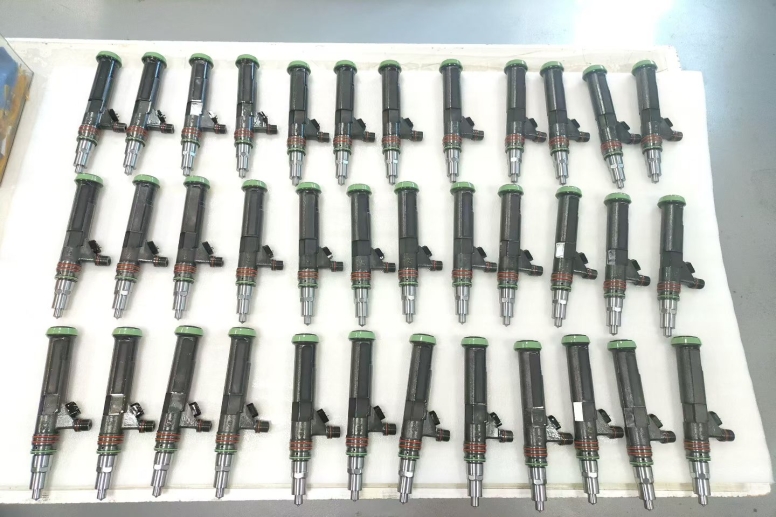
How to rebuild a high-quality fuel injector ?
Tools & Materials Required
Cleaning Solvent: Specialized injector cleaner (like carburetor cleaner) or ultrasonic cleaner with appropriate solution
Replacement Parts Kit: O-rings, filter baskets, pintle caps, spacers (specific to your injector model)
Specialized Tools: Injector puller/removal tool, multimeter, noid light, fuel pressure tester
Basic Tools: Safety glasses, gloves, clean towels, small picks, soft-bristle brushes, compressed air
Test Equipment: Injector test bench or pulsing circuit (optional but recommended)
Workspace: Clean, well-ventilated area away from ignition sources
Step-by-Step Rebuild Process
Phase 1: Removal & Initial Inspection
Relieve Fuel Pressure:
Disconnect fuel pump fuse/relay
Start engine until it stalls
Crank engine 2-3 more seconds
Disconnect battery negative terminal
Remove Injectors:
Remove fuel rail mounting bolts
Carefully lift rail with injectors attached
Use proper removal tool if injectors are stuck
Label each injector's original position
Initial Inspection:
Check for physical damage (cracks, melted plastic)
Inspect electrical connectors for corrosion
Examine spray pattern residue on tip
Phase 2: Disassembly & Cleaning
Disassembly:
Remove retaining clip/clamp
Carefully remove and discard all O-rings, spacers, filter baskets
Note exact orientation of all components
For some injectors: remove pintle cap (if applicable)
Deep Cleaning:
Option A: Ultrasonic Cleaning (Recommended)Option B: Manual Cleaning
Soak in commercial injector cleaner for 2+ hours
Use soft brush to gently clean exterior
Flush with cleaner using syringe (backward and forward)
Never use wire brushes or abrasive tools
Use 50/50 mix of specialized injector cleaner and distilled water
Clean for 10-15 minutes at 40-60°C (104-140°F)
Rotate injector halfway through cycle
Rinse with distilled water
Drying:
Blow out with compressed air (low pressure)
Allow to air dry completely
Never use shop towels that can leave lint
Phase 3: Replacement & Reassembly
Component Replacement:
Lubricate ALL new O-rings with clean engine oil or silicone grease
Install new filter basket into top of injector
Install new lower O-ring and spacer
Install new upper O-ring
Replace pintle cap if removed (snap on carefully)
Electrical Testing (Critical Step):
Measure coil resistance with multimeter
Compare to manufacturer specifications (typically 10-16Ω for high-impedance, 2-5Ω for low-impedance)
All injectors should be within 0.5Ω of each other
Test for continuity between terminals and injector body (should be infinite/open circuit)
Phase 4: Testing Before Installation
Spray Pattern & Flow Testing:
Professional Method (Test Bench):DIY Functional Test:
Create test rig with 12V source and switch
Submerge tip in clean container
Pulse injector briefly
Observe spray pattern (should be even, not streaming)
Compare all injectors for consistency
Connect to test bench with proper fluid
Test at various pulse widths
Verify consistent spray pattern (fine conical mist)
Measure flow rate (should be within 3% between injectors)
Leak Testing:
Apply fuel pressure (use test rig or carefully with fuel rail)
Check for leaks at all seals
Verify no leakage at tip when closed
Phase 5: Reinstallation
Final Preparation:
Lubricate all O-rings again before installation
Ensure fuel rail and manifold ports are clean
Replace any additional seals on the fuel rail
Installation:
Install injectors into fuel rail first
Carefully insert assembly into manifold
Ensure injectors seat fully without forcing
Install retaining clips/clamps
Torque fuel rail bolts to specification
Reconnect electrical connectors
Post-Installation:
Reconnect battery
Turn key to "on" (not start) for 2-3 seconds to pressurize system
Check for leaks with paper towels around connections
Start engine and verify proper operation
Quality Control Standards
Flow Rate Variance: ±2-3% maximum between injectors
Spray Pattern: Consistent fine conical mist, no dripping
Electrical Specs: Within manufacturer tolerance
Leakage: Zero drops per minute when pressurized
Seal Integrity: No compression set on O-rings
Common Pitfalls to Avoid
Using incorrect O-ring material (must be fuel-resistant)
Over-compressing O-rings during installation
Contaminating cleaned injectors with dirty hands/tools
Skipping electrical testing
Mixing up injector positions (critical for some direct-injection systems)
Using petroleum-based lubricants on seals
When to Consider Professional Service
Direct injection (GDI) injectors (require specialized equipment)
Piezoelectric injectors (especially diesel)
If any cracks or physical damage are found
If resistance readings are outside specifications
If consistent spray pattern cannot be achieved
Post-Rebuild Verification
Monitor fuel trim values with scan tool (should stabilize)
Check for misfire codes
Verify smooth idle and acceleration
Confirm fuel economy returns to normal
Rebuilding fuel injectors can restore performance and save significant costs compared to replacement, but requires meticulous attention to detail. Always consult the specific service manual for your vehicle's injectors, as designs vary significantly between port injection, direct injection, and diesel systems.