


Mechanical vs Common Rail vs HEUI Injectors: Key Differences and Which Engines Use Each
Mechanical vs Common Rail vs HEUI Injectors: Key Differences and Which Engines Use Each
Diesel fuel injectors are the heart of any diesel engine’s fuel system. They determine how much fuel enters the cylinder, when it enters, and how well it atomizes. But not all diesel injectors work the same way. The three most common types you’ll encounter are mechanical injectors, common rail injectors, and HEUI injectors.
Understanding the differences between these three designs is important for mechanics, fleet owners, and anyone shopping for replacement diesel injectors. Each type has its own working principle, maintenance requirements, and engines that use it. In this guide, we’ll break down mechanical vs common rail vs HEUI injectors, explain their key differences, and list the engines that commonly use each.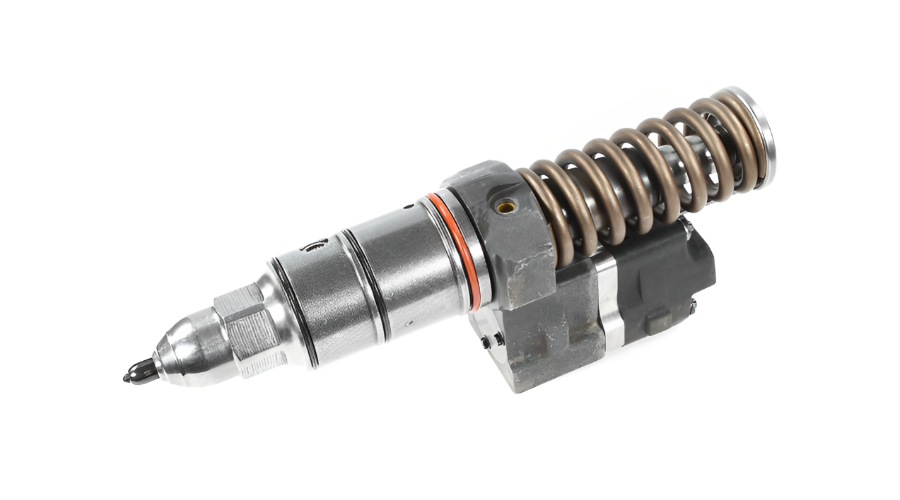
What Is a Diesel Fuel Injector?
A diesel fuel injector sprays fuel into the combustion chamber in a fine mist. Because diesel engines rely on compression ignition, fuel must be delivered at the right pressure, timing, and spray pattern. If an injector is worn, clogged, or mismatched, you’ll see symptoms such as rough idle, white or black smoke, poor fuel economy, hard starting, and reduced power.
While all diesel injectors perform the same basic job, they use very different methods to build pressure and control injection. That’s where mechanical, common rail, and HEUI designs differ.
Mechanical Fuel Injectors: Simple, Robust, and Proven
How Mechanical Injectors Work
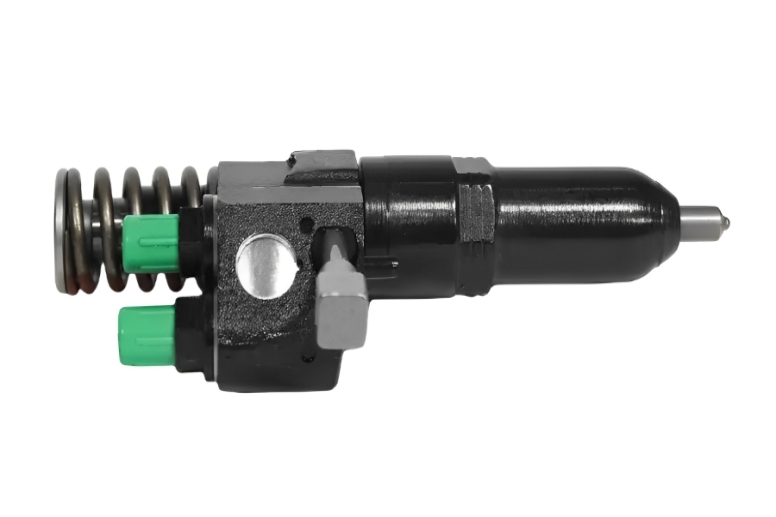
Mechanical injectors are the oldest and simplest of the three designs. They are controlled by the engine’s mechanical fuel injection pump rather than an electronic control unit (ECU).
In a typical pump-line-nozzle system, the injection pump pressurizes fuel and sends it through a high-pressure line to each injector. The injector opens when fuel pressure reaches a predetermined “pop pressure,” usually set by a spring inside the injector. Injection timing is controlled by the pump’s mechanical governor and camshaft drive.
Some mechanical unit injectors are actuated directly by the engine camshaft, but the key point is the same: no electronic solenoid controls the injection event.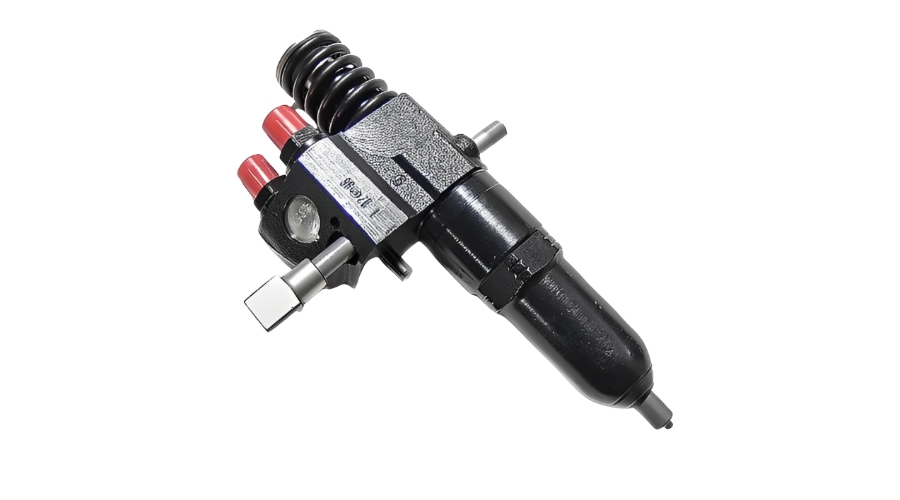
Key Characteristics
Mechanical actuation and control
Injection pressure depends on engine speed and pump condition
No ECU or electronic solenoids
Simple diagnostics and rebuilds
Less precise timing and injection quantity than electronic systems
Pros and Cons
Pros:
Simple and durable
Easy to troubleshoot for experienced mechanics
Lower replacement cost in many applications
Less sensitive to electrical faults
Cons:
Less precise fuel control
Higher emissions and noise
Injection pressure varies with engine speed
Limited ability to perform multiple injection events
Engines That Use Mechanical Injectors
Mechanical injectors are common on older diesel engines, especially pre-emission and early emission models. Examples include:
Cummins 12-valve 5.9L B-series (1989–1998)
Ford 7.3L IDI diesel
Older International DT466 mechanical engines
Caterpillar 3208 and older 3406 mechanical models
Many Perkins, Isuzu, and older agricultural/industrial diesel engines
If you own a classic truck, tractor, or older piece of equipment, there’s a good chance it uses mechanical injectors.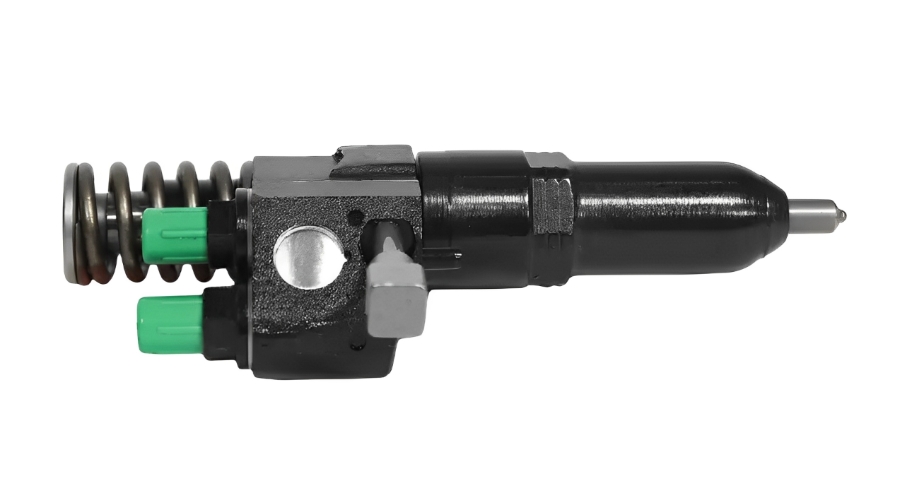
Common Rail Injectors: Electronic Precision and High Pressure
How Common Rail Injectors Work
Common rail injection is the dominant technology in modern diesel engines. Instead of using a separate injection pump line for each cylinder, a high-pressure fuel pump supplies fuel to a shared rail. The rail stores fuel at extremely high pressure—often 20,000 to 30,000 psi or more in modern systems.
Each injector is connected to the rail and controlled electronically by the ECU. The ECU opens the injector solenoid or piezo actuator at the exact moment needed. Because pressure is stored in the rail, injection pressure is independent of engine speed.
This design allows multiple injection events per combustion cycle, such as pilot injection, main injection, and post injection. These events improve cold starting, reduce noise, lower emissions, and increase fuel efficiency.
Key Characteristics
High-pressure fuel rail supplies all injectors
Electronically controlled solenoids or piezo actuators
Injection pressure independent of engine speed
Multiple injection events possible
Requires scan-tool diagnostics and precise coding
Pros and Cons
Pros:
Precise injection timing and fuel quantity
High pressure for better atomization
Lower emissions and smoother operation
Supports advanced combustion strategies
Cons:
More complex and expensive
Sensitive to contaminated fuel
Requires electronic diagnostics
Injector coding and calibration may be needed after replacement
Engines That Use Common Rail Injectors
Common rail systems are used on most modern diesel engines, including:
Cummins 5.9L ISB and 6.7L engines (2003 and newer)
Duramax 6.6L (2001 and newer)
Ford 6.4L and 6.7L Powerstroke
Many Volkswagen TDI common rail engines (2009 and newer)
Modern Bosch, Denso, and Delphi common rail systems in passenger cars, trucks, and equipment
If your diesel engine has a fuel rail, an ECU, and electronically controlled injectors, it is likely a common rail system.
HEUI Injectors: Hydraulically Actuated, Electronically Controlled
How HEUI Injectors Work
HEUI stands for Hydraulically actuated Electronically controlled Unit Injector. This design was developed by Caterpillar and is used in several Ford, International, and Caterpillar engines.
HEUI injectors do not use a camshaft or a common fuel rail to generate injection pressure. Instead, high-pressure engine oil is used to actuate an intensifier piston inside the injector. The piston amplifies the fuel pressure, and the ECU controls a solenoid that starts and ends the injection event.
Because HEUI injectors rely on engine oil pressure, oil quality and oil system health are critical. Dirty oil, low oil pressure, or a failing high-pressure oil pump can cause poor running, hard starting, and injector failure.
Key Characteristics
Actuated by high-pressure engine oil
Electronically controlled by the ECU
Fuel pressure is amplified inside the injector
No camshaft actuation
Very sensitive to oil quality and oil pressure
Pros and Cons
Pros:
Electronic control with good timing precision
High injection pressure for good atomization
No camshaft-driven injector lobes
Proven in medium-duty and heavy-duty applications
Cons:
Oil quality and oil pressure are critical
More complex than mechanical systems
Diagnostics require understanding both oil and fuel systems
Injector replacement can be costly
Engines That Use HEUI Injectors
HEUI injectors are most commonly associated with:
Ford 7.3L Powerstroke (1994–2003)
Ford 6.0L Powerstroke (2003–2007)
International T444E, DT466E, and DT530E
International VT365
Caterpillar 3126, 3126B, 3126E, and C7 engines
If you own a 7.3L or 6.0L Powerstroke, you’re already familiar with HEUI injectors. These engines are known for requiring clean oil and proper oil pressure to run correctly.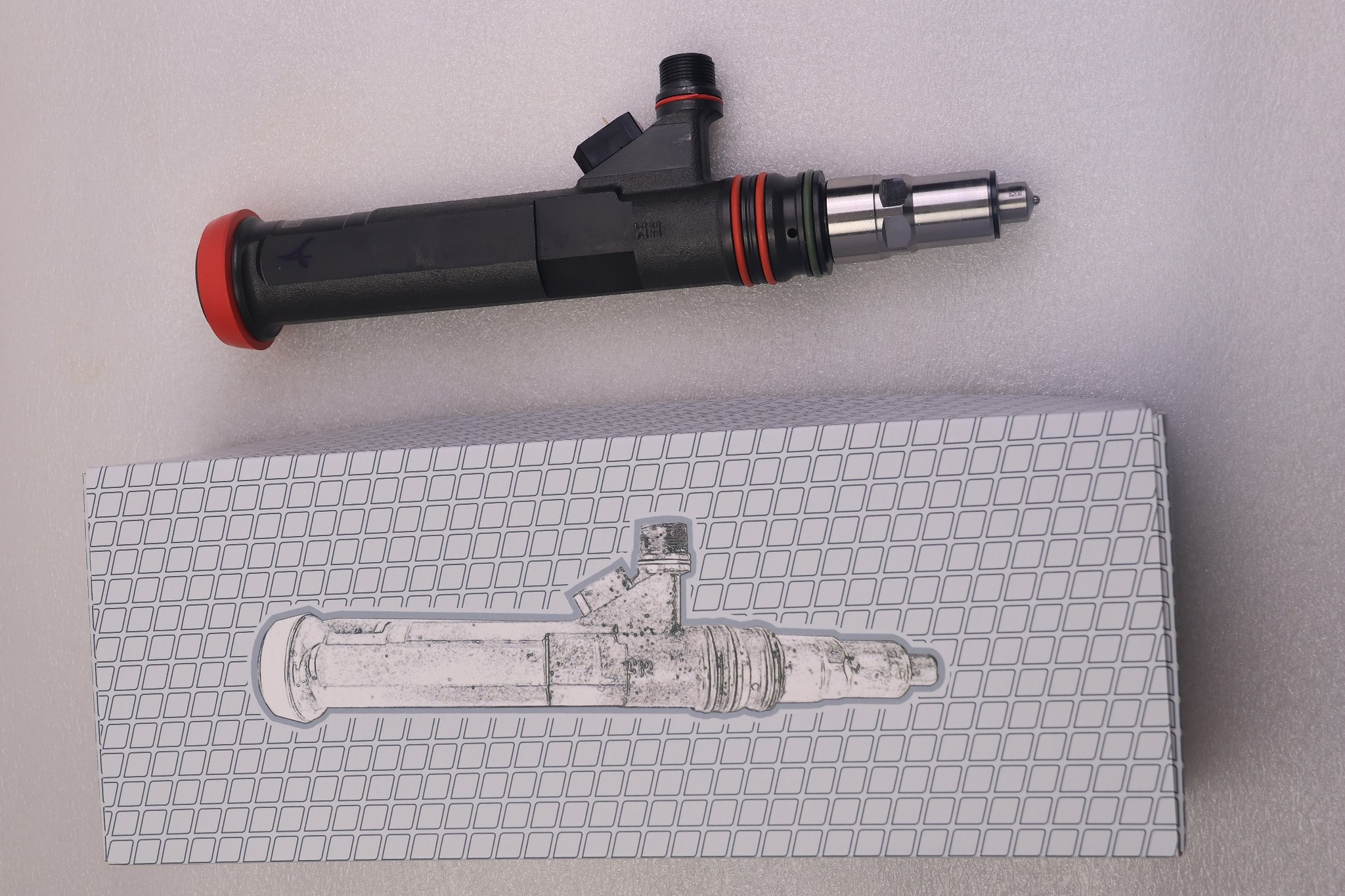
Mechanical vs Common Rail vs HEUI Injectors: Comparison Table
| Feature | Mechanical Injectors | Common Rail Injectors | HEUI Injectors |
|---|---|---|---|
| Pressure Source | Injection pump | High-pressure fuel rail | High-pressure engine oil |
| Control Method | Mechanical | Electronic (ECU) | Electronic (ECU) |
| Injection Timing | Pump/governor controlled | ECU controlled | ECU controlled |
| Multiple Injection Events | Limited | Yes | Yes, limited |
| Pressure Independent of Engine Speed | No | Yes | Yes |
| Diagnostics | Mechanical tools | Scan tool and electronic tests | Scan tool, oil pressure, and fuel tests |
| Fuel Quality Sensitivity | Moderate | High | Moderate |
| Oil Quality Sensitivity | Low | Low | Very high |
| Common Engines | Cummins 12V, Ford 7.3 IDI | Cummins ISB, Duramax, 6.7 Powerstroke | Ford 7.3/6.0 Powerstroke, Cat 3126 |
Key Differences at a Glance
The biggest difference is how injection pressure is created and controlled:
Mechanical injectors rely on a mechanical injection pump and open at a set pressure. They are simple but less precise.
Common rail injectors use a shared high-pressure fuel rail and electronic control. They offer the highest precision and are the standard for modern diesel engines.
HEUI injectors use high-pressure engine oil to actuate the injector and electronics to control timing. They sit between mechanical and common rail in terms of complexity but have unique oil-system requirements.
Another key difference is diagnostics. Mechanical injectors can often be tested with basic tools. Common rail and HEUI injectors usually require a scan tool, live data, and specific diagnostic procedures. Replacing a common rail injector may also require coding it to the ECU.
Which Injector Type Should You Choose?
You should always match the injector type to your engine’s original fuel system. You cannot simply swap mechanical injectors for common rail injectors or replace HEUI injectors with a different design without major modifications.
When buying replacement diesel injectors, keep these tips in mind:
Identify your engine and fuel system first. Use the engine serial number, model year, and injector part number.
Use OEM or high-quality aftermarket injectors. Cheap injectors can cause poor performance and repeat failures.
Check fuel and oil condition. Common rail systems are sensitive to contaminated fuel, while HEUI systems are sensitive to dirty oil.
Follow installation procedures. Common rail injectors may need coding, and HEUI injectors require clean oil and proper priming.
Diagnose before replacing. A rough-running engine is not always caused by injectors. Check fuel pressure, oil pressure, and fault codes first.
If you need help identifying the right injector for your Cummins, Powerstroke, Duramax, Caterpillar, or International engine, contact our team with your engine details and we’ll help you match the correct part.
FAQ: Mechanical, Common Rail, and HEUI Injectors
Are HEUI injectors the same as common rail injectors?
No. HEUI injectors use high-pressure engine oil to actuate the injector, while common rail injectors use fuel pressure stored in a shared rail. Both are electronically controlled, but their pressure sources and internal designs are different.
Can I convert mechanical injectors to common rail?
Converting a mechanical diesel engine to common rail is a major engineering project. It requires a new cylinder head, fuel system, ECU, wiring harness, sensors, and calibration. For most applications, it is not practical or cost-effective.
Why are HEUI injectors so sensitive to oil quality?
HEUI injectors use engine oil to generate injection pressure. Dirty oil or low oil pressure can damage the injector’s internal components and cause poor performance. Regular oil changes and oil system maintenance are essential.
How can I tell which injector type my engine uses?
Check your engine model, year, and fuel system layout. If you see a high-pressure fuel rail, it is likely common rail. If the injectors are actuated by high-pressure oil, it is HEUI. If the injectors are fed by a mechanical injection pump with no electronic control, it is mechanical.
Conclusion
Mechanical, common rail, and HEUI injectors all deliver diesel fuel, but they do it in very different ways. Mechanical injectors are simple and proven, common rail injectors offer modern precision and efficiency, and HEUI injectors use engine oil pressure for hydraulic actuation.
Knowing which system your engine uses is the first step toward correct maintenance and reliable replacement. Whether you’re repairing an older Cummins 12-valve, diagnosing a 6.0L Powerstroke, or servicing a modern common rail truck, choosing the right injector type is essential for performance and longevity.