
- March 20,2026
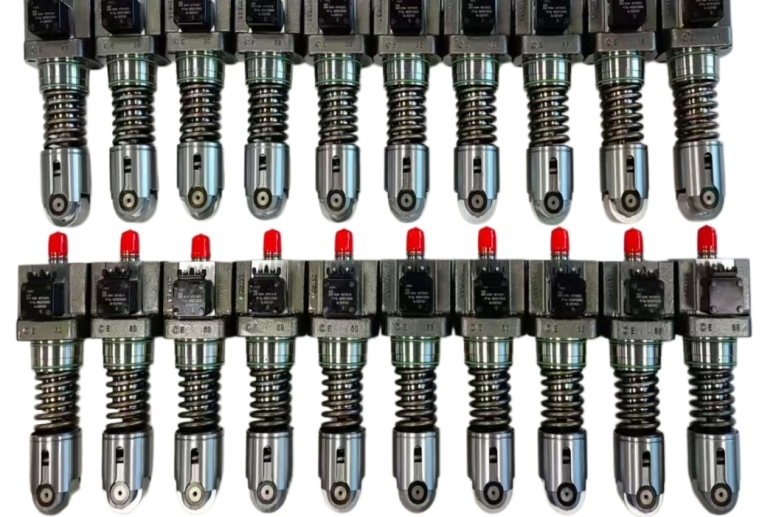
The structural characteristics, working principle, and maintenance recommendations of Bosch unit pumps
Here is a detailed breakdown of the structural characteristics, working principle, technical advantages, and maintenance recommendations for these systems.
1. Structural Characteristics
The term "monomer" (or unit pump) signifies that each engine cylinder has its own individual pumping element, separate from the injector.
Modular Design: Each cylinder has its own pump module. This contrasts with inline pumps where one pump serves all cylinders.
Key Components:
Plunger and Barrel: A precision-matched set where the plunger reciprocates to pressurize the fuel. The plunger often has a helical groove (control edge) to regulate the fuel quantity.
Roller Tappet: Located at the bottom of the pump, it follows the profile of the engine's camshaft to convert rotary motion into linear motion of the plunger.
Delivery Valve: Located at the top of the pump, it maintains residual pressure in the high-pressure line and prevents fuel backflow after injection.
Solenoid Valve (for modern electronic units): Located either on the pump itself or in the high-pressure line, controlled by the ECU to precisely time the start and end of injection.
Physical Layout: The pumps are mounted directly onto the engine block (for unit pumps) or on a separate pump housing driven by gears (for older PF types). They are connected to the injector in the cylinder head via a short, high-pressure steel pipe.
2. Working Principle
The working principle varies slightly between mechanically controlled (older) and electronically controlled (modern) versions.
Mechanical Monomer Pump (e.g., Bosch PF):
Fuel Supply: The engine camshaft lobe pushes the roller tappet upward, moving the plunger inside the barrel.
Pressurization: As the plunger rises and covers the inlet port, fuel is compressed.
Injection: High-pressure fuel opens the delivery valve, travels through the pipe, and lifts the injector nozzle needle to spray into the combustion chamber.
Spill Port Control: As the plunger continues to rise, a helical groove on the plunger uncovers a spill port. This drops the pressure instantly, stopping injection. The position of the plunger (rotated by a control rack) determines when this spill occurs, thereby controlling the fuel quantity.
Electronic Unit Pump (e.g., Bosch UPS):
Mechanical Drive: The camshaft pushes the plunger up, building pressure mechanically.
ECU Control: A high-speed solenoid valve on the pump is held open initially, allowing fuel to spill back to the tank instead of being pressurized.
Injection Start: The ECU closes the solenoid valve. With the spill path blocked, pressure builds instantly and injection begins.
Injection End: The ECU opens the solenoid valve. Pressure drops immediately, and injection stops. This allows for very precise timing and variable injection timing regardless of engine speed.
3. Technical Advantages
Compared to traditional inline pumps and early rotary pumps, Bosch monomer pumps offer significant benefits:
High Injection Pressure: Because the pump is located close to the injector (short high-pressure lines) and driven directly by the camshaft, they can generate extremely high pressures (up to 1800–2200 bar) without the complexity of a Common Rail system. This allows for better fuel atomization.
Hydraulic Efficiency: The short pipe length between the pump and injector minimizes pressure loss and "pressure wave" reflections, leading to more precise injection timing.
Reliability and Durability: Since the pumps are independent, if one pump fails, the engine can often still run (albeit roughly) on the remaining cylinders. They are mechanically robust and less sensitive to fuel contamination than Common Rail systems.
Servicing: Individual pumps can be replaced without having to remove and recalibrate a central pump, simplifying repairs.
Flexibility (Electronic Version): Electronic control allows for features like pilot injection (in some advanced versions) and boost-pressure-dependent fuel delivery, optimizing power and emissions.
4. Maintenance Recommendations
Maintaining Bosch monomer pumps is critical for engine performance. Because they are mechanically driven, incorrect maintenance can lead to catastrophic engine failure.
Fuel Quality is Paramount:
The plunger and barrel are precision components with clearances in the micron range. Water and dirt are the primary enemies.
Regularly drain the water separator in the fuel filter.
Replace fuel filters at the intervals specified by the engine manufacturer.
Valve Clearance Adjustment:
The pump's tappet rides directly on the camshaft. Incorrect valve or injector timing often stems from improper tappet adjustment.
Always use a feeler gauge to check the gap between the tappet and the cam lobe (base circle) during installation or engine overhauls. A gap that is too tight can destroy the pump and camshaft.
Lubrication:
Many monomer pumps rely on engine oil for lubrication of the tappet and cam interface.
Maintain engine oil at the correct level and change it on schedule. Contaminated oil will wear down the tappet roller and cam lobe quickly.
Inspection of Delivery Valve and High-Pressure Lines:
Check high-pressure pipes for cracks or signs of chafing. A leaking high-pressure pipe can cut like a laser and poses a fire hazard and injection timing issue.
If the engine is hard to start or runs roughly, the delivery valve (which maintains residual pressure) may be worn or stuck.
Electronic Connectors (for UPS systems):
On electronic unit pumps, the solenoid is actuated by the ECU. Corrosion in the wiring harness connectors can lead to "no injection" faults.
Inspect connectors for oxidation and ensure they are securely locked.
Torque Specifications:
When replacing a monomer pump, always use a torque wrench on the mounting nuts/bolts. Over-tightening can distort the pump housing, causing the plunger to seize. Under-tightening can change the timing or cause the pump to leak oil.